


- ABS
- AM/FM Radio
- Air Bags
- Air Conditioning
- Alloy Rims
- CD Player
- Immobilizer Key
- Keyless Entry
- Power Locks
- Power Mirrors
- Power Steering
- Power Windows
- Rear AC Vents
- Rear speakers
- Sun Roof
- USB and Auxillary Cable
- American Express
- Cash
- Cheque
- Discover
- Interact
- MasterCard
- Visa
- Gift Sertificate
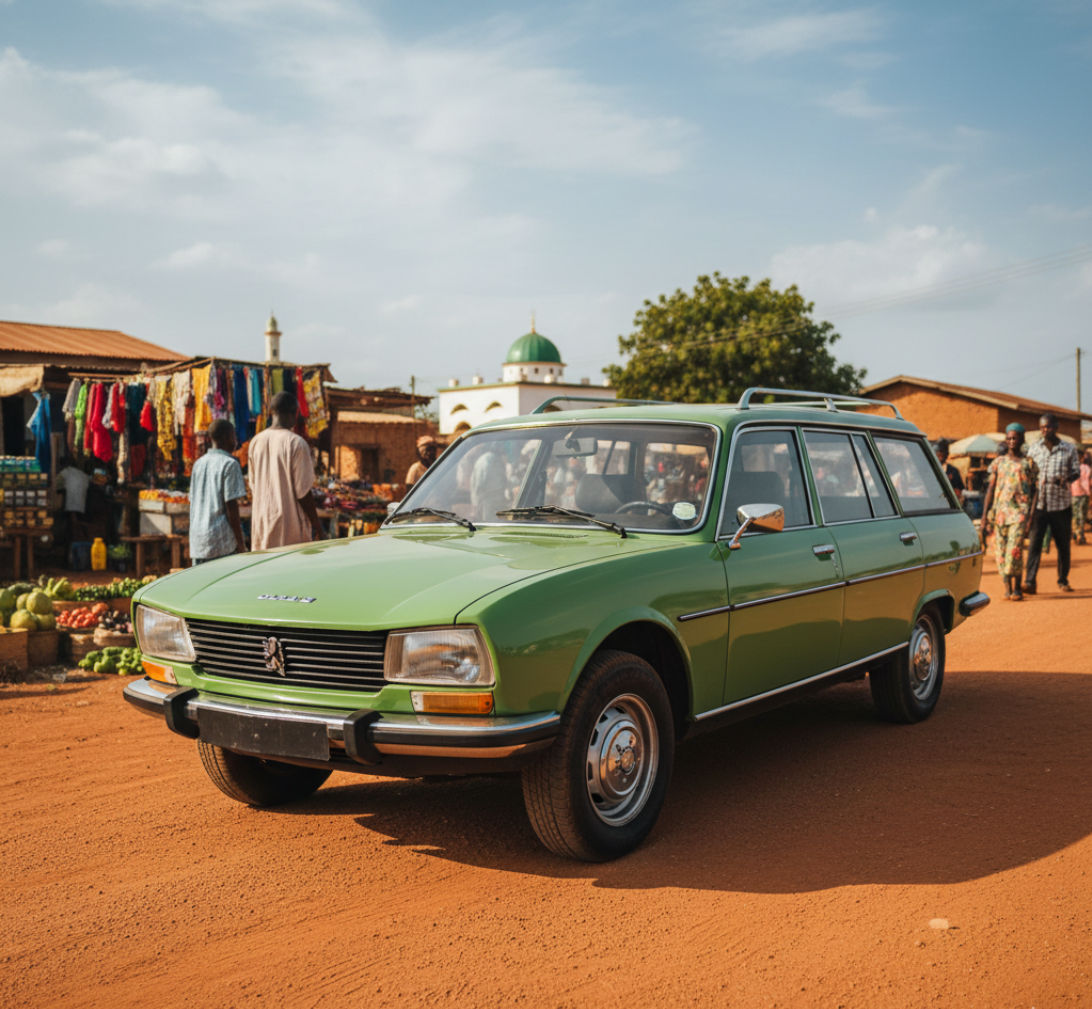
The Peugeot 504 Station Wagon is arguably the most culturally significant vehicle in Nigerian automotive history. Often simply called "The 504," it served as the official car for government officials, the trusted ride for the middle class, and the backbone of interstate transport for decades.
1. Design & Engineering Designed by the legendary Italian house Pininfarina, the 504 Wagon combines elegant European styling with rugged utility.
-
Body Style: Unlike the sedan, the Wagon features a raised roofline at the rear and a squared-off tailgate to maximize cargo volume.
-
Suspension: The secret to its success in Nigeria is its suspension. The Wagon features a solid live rear axle with four coil springs, designed specifically to carry heavy loads over potholes and unpaved roads without sagging—a feature that made it superior to most modern SUVs.
Ground Clearance: It sits noticeably higher than standard cars, allowing it to navigate rough terrain with ease.
2. Performance
-
Engine: In the Nigerian market, this is most likely powered by the 2.0-liter XN1 petrol engine or the indestructible 2.3-liter Indenor diesel engine.
-
Drivetrain: Rear-Wheel Drive (RWD) with a torque-tube drive shaft, which protects the transmission components from damage on bad roads.
3. The "Naija" Legacy
-
Assembled in Kaduna: This vehicle is a symbol of Nigerian industry, rolled off the assembly lines at the PAN plant in Kaduna.
The "Familiale" Variant: Many 504 Wagons in Nigeria were the "Familiale" trim, featuring three rows of seats, capable of carrying 7 to 8 passengers comfortably, making it the precursor to the modern minivan.